
What Is Chamber Music? A Guide for Your First Concert
Chamber music is classical music written for a small group of musicians, usually two to nine players, with one musician on each part and no conductor. The performers lead each other through eye contact and listening. Audiences sit close enough to see it happen, which is what makes it feel like a conversation.
Last season, 65% of the people who bought a ticket to a Chamber Music Rochester concert had never bought one before.
Nearly two out of every three people in the room were doing this for the first time. Not the ones who studied piano for twelve years. Not the subscribers who have been coming since the 1970s. First-timers, working out where to park and wondering whether they were dressed right.
If you are curious about a concert but unsure what you would be walking into, you are in the majority. Here is what to expect.
What Does Chamber Music Mean?
The word "chamber" points back to the rooms where this music started. Before concert halls, small groups of musicians played together in the rooms of houses, for whoever happened to be there. That closeness stuck, even after the music moved into larger spaces.
Chamber Music America, the national organization for the field, defines it as music composed for small ensembles with one musician per part, generally performed without a conductor. Nobody stands at the front telling the group what to do.
Most ensembles fall somewhere between two and nine players. Common combinations include:
• A string quartet, with two violins, a viola, and a cello
• A piano trio, with piano, violin, and cello
• A woodwind quintet, with flute, oboe, clarinet, bassoon, and horn
• A brass quintet, with two trumpets, horn, trombone, and tuba
• A sonata, played by one instrumentalist and a pianist
Composers have written for countless other combinations. A concert might include percussion, harp, saxophone, guitar, or a singer, which is why one can sound nothing like the last.
Chamber Music vs. Orchestra: What Is the Difference?
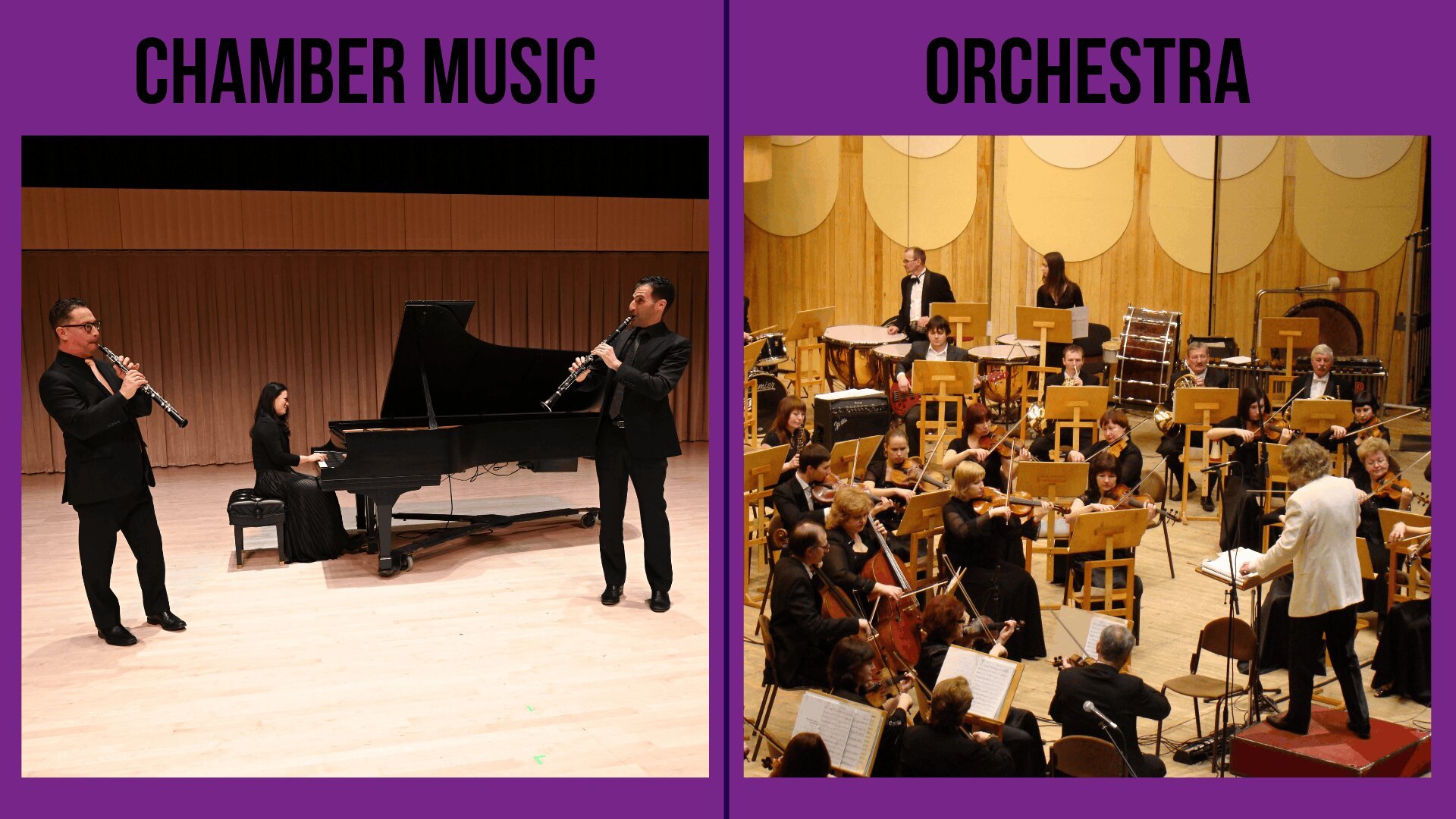
The short answer is size, and what size does to the way musicians work.
| Feature | Orchestra | Chamber ensemble |
|---|---|---|
| Number of musicians | 60 to 100+ | Usually 2 to 9 |
| Musicians per part | Several players share one part | One player per part |
| Conductor | Yes | Usually none |
| How the group stays together | The conductor's beat | Eye contact, body language, breath, listening |
| What you hear as a listener | A blended wall of sound | Each individual voice, distinctly |
| How close you sit | Often far from the stage | Close enough to see expressions |
In an orchestra, a dozen violinists might be playing the same line. In a string quartet, there are four people making four distinct decisions, and every one of them is audible. If a cellist plays a phrase a little differently than last week, you hear it.
Without a conductor, the players watch each other constantly, breathe together, and adjust in real time. You get to see that happen from a few rows away.
Chamber music is not a smaller version of an orchestra. It is a different experience entirely, built on musicians listening to each other in real time while you watch.
What Does Chamber Music Sound Like?
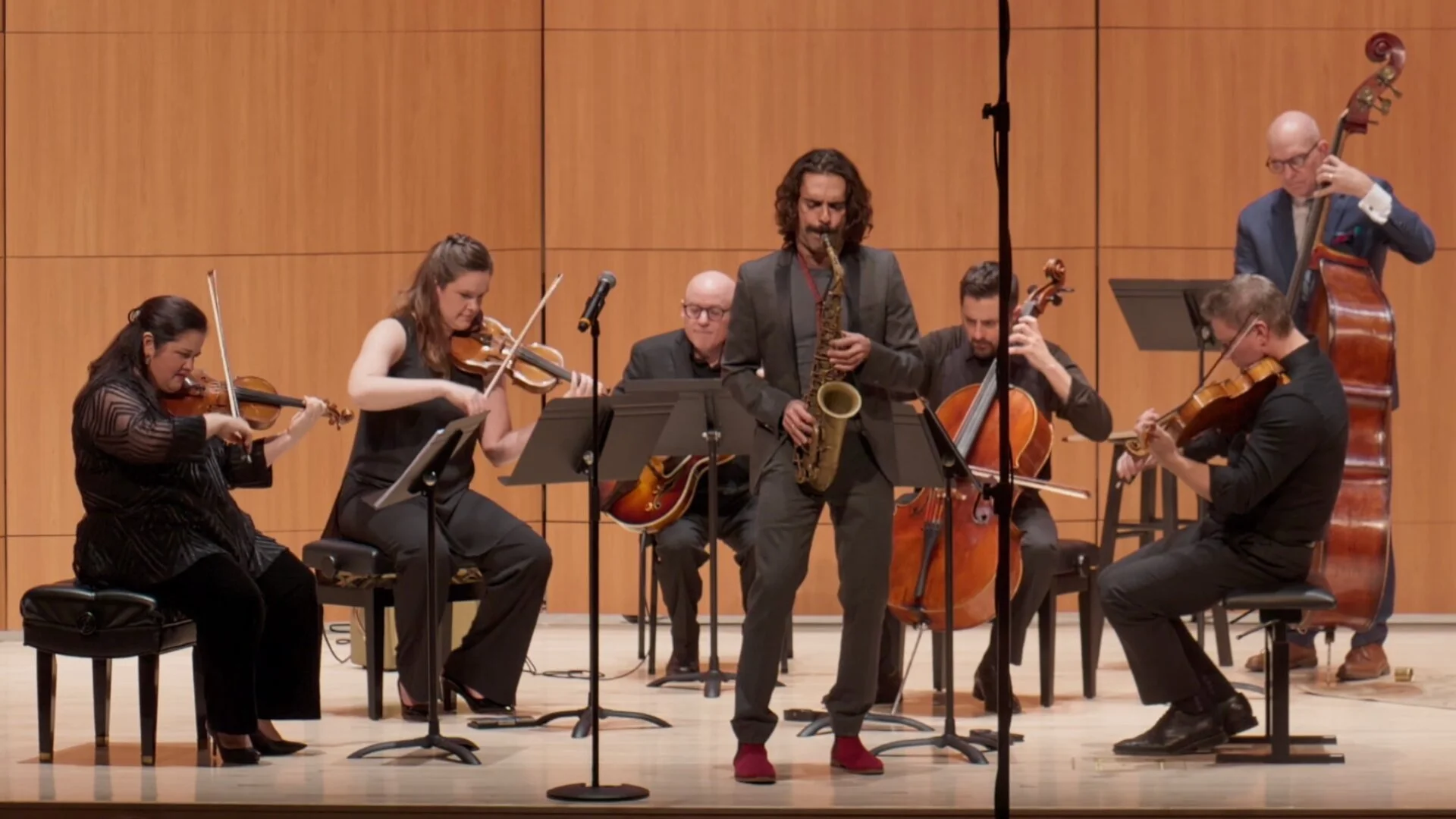
There is no single chamber music sound.
Some pieces are quiet and reflective. Others are loud, fast, funny, or unsettling. You might hear Mendelssohn on one program and a living composer on the next. Chamber Music America counts jazz, folk, and contemporary work within the field, and composers have never stopped writing for small ensembles, as the Chamber Music Society of Lincoln Center traces through the twentieth century and into the present.
Our own programs run the same range. One patron, Jane C., wrote to us after a recent concert:
"A satisfying mix of classical and contemporary. I wasn't sure if I was going to like Eddie Barbash's pieces, but I sure did. Kyle Athayde's arrangements were an inventive combination of string quartet and jazz combo. Bravo to all!"
Chamber music describes how musicians come together. It puts no limit on what they play.
Do You Need to Know Classical Music First?
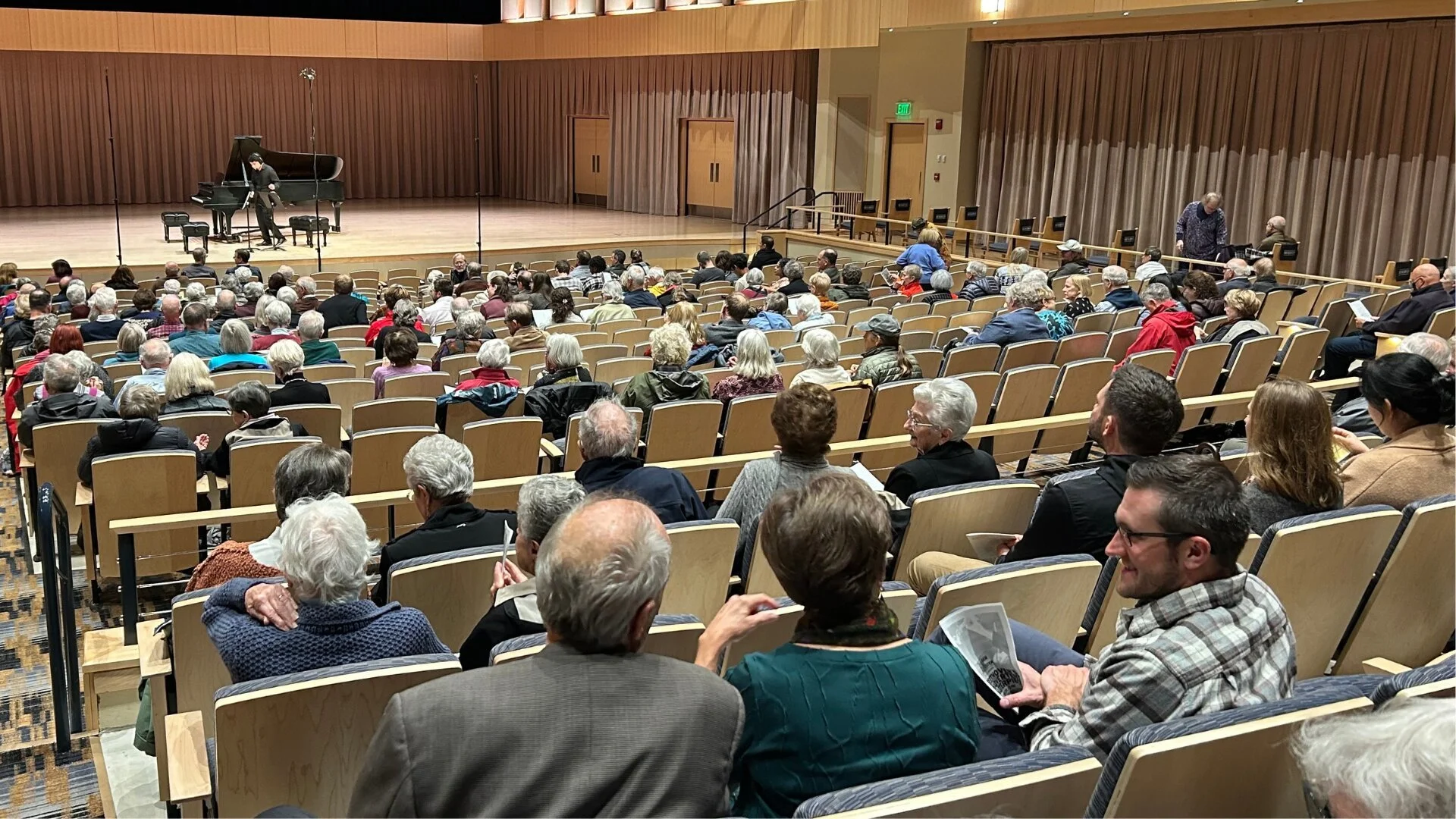
No. And the numbers say most of the room is in the same position.
Nationally, only about 5% of American adults attended a live classical music performance in 2022, according to the National Endowment for the Arts. Against that, our 65% first-time ticket buyers means the room is mostly people who had never done this before and came anyway.
You do not need to study the program in advance. You do not need to recognize the composer, or know what a sonata is, or be able to name the instruments. Most people simply listen for whatever moves them. A melody that keeps returning. One instrument answering another. A sudden drop in volume that changes the whole mood.
One patron, Juliette S., put it this way: "Until we started attending together, I thought I didn't care for chamber music. I was thrilled to discover how wrong I was."
What Happens at a Chamber Music Concert?
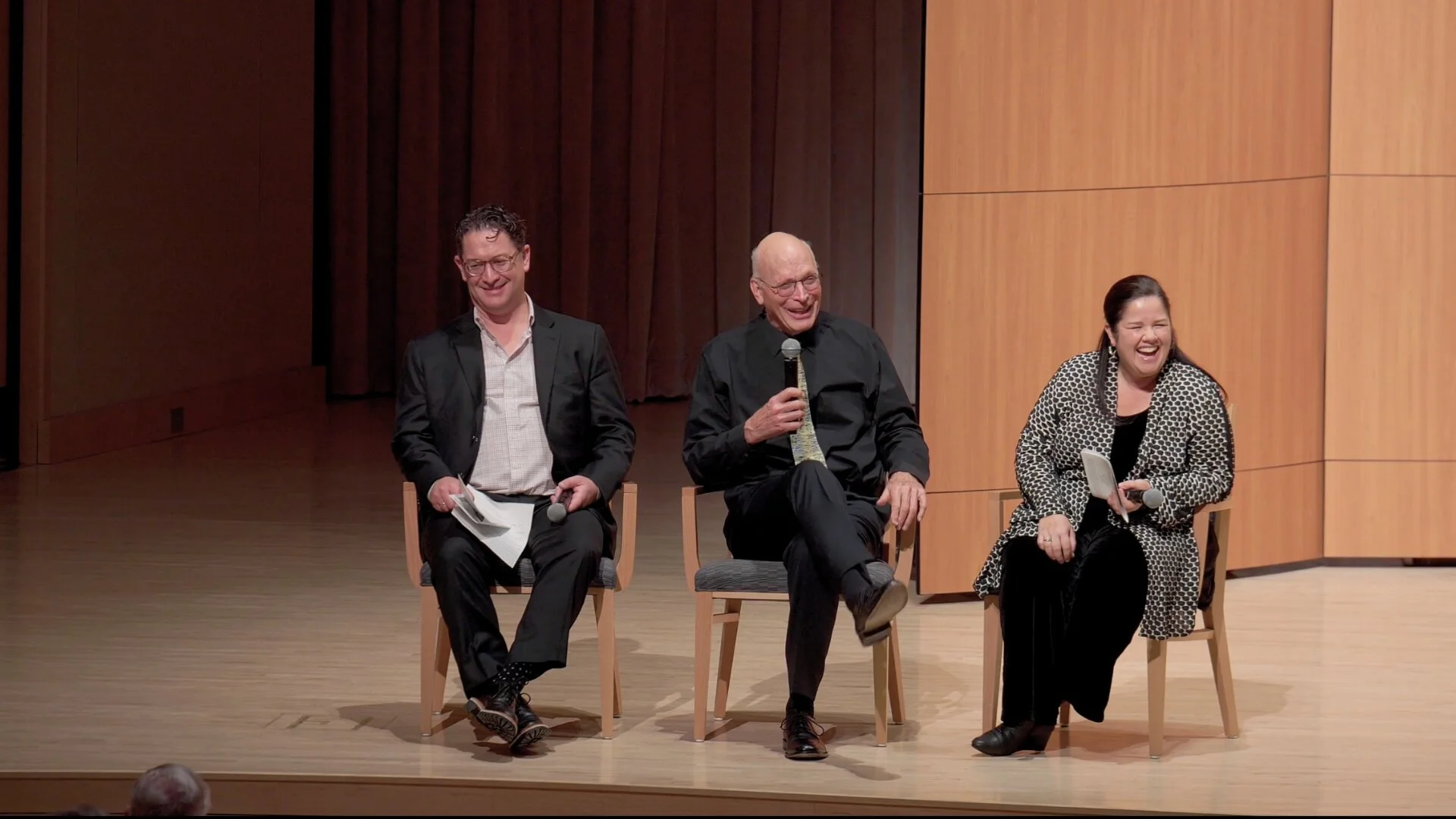
Before the music, there is a pre-concert talk. Our artistic directors introduce the composers, the musicians, and the stories behind what you are about to hear. For plenty of people it becomes the favorite part. Steven C., in his first season with us, wrote: "The concerts are fantastic, but the pre-concert talks are so engaging. After each concert talk we say Juliana would be such an interesting dinner party guest."
Then the musicians walk on, take their places, and tune. The audience applauds as they arrive. The room goes quiet and the music starts.
A typical program has several works, separated by short pauses and an intermission. Some pieces are built from several sections called movements, and the musicians will pause briefly between them without leaving the stage. The convention is to wait until the whole piece is finished before applauding, rather than clapping between movements.
If you are not sure whether a piece has ended, watch the players. They relax, lower their instruments, and look up at the room. Follow everyone else and you will be fine. Nobody is keeping score.
Getting Started: The Practical Details
Wear whatever you would wear to a nice afternoon out. Some people dress up. Others come in jeans. Both sit in the same rows and nobody notices. There is no dress code.
Plan for an afternoon, not an evening. Our concerts run roughly from 2:30 to 4:45 p.m., including the pre-concert talk and an intermission. The music itself begins at 3:00 and is about ninety minutes. You will be home for dinner.
Bring your children, and bring them free. Students and children attend at no cost. Just stop at the welcome table when you arrive. Last season we welcomed 110 students this way, and our musicians also teach and perform in Rochester schools and universities through a program funded by the New York State Council on the Arts. Younger listeners often get the most out of the pre-concert talk, since it gives them something specific to listen for. Because seating is general admission, families who want an aisle seat should arrive a little early.
Seating is general admission, so arrive early if you want to be close. No assigned seats and no seat numbers on your ticket. You choose when you walk in, which means the front rows go to whoever gets there first. The point of chamber music is proximity, so it is worth the extra ten minutes. Our concerts are held at Beston Hall in the Glazer Music Performance Center at Nazareth University, a room built for exactly this, and from most seats you can see the players' faces.
Which Concert Should Be Your First?

Start with a familiar name if that feels best
• A program built around Mendelssohn, Brahms, Beethoven, or Mozart gives you a recognisable anchor
• You will likely know at least one melody
• The unfamiliar pieces on the program then feel like a bonus rather than a test
Most of our concerts pair well-known composers with something newer, so a familiar name on the poster rarely means a predictable afternoon.
Start with something unexpected if that sounds better
• Programs featuring jazz, voice, or an unusual instrument connect to music you may already listen to
• These are often the concerts that convert people who assumed this was not for them
• Jane C. came expecting to dislike the jazz-influenced program and left writing to tell us she loved it
Our musicians come from the Rochester Philharmonic Orchestra and the Eastman School of Music, alongside visiting artists, and each concert brings a different combination together. That exact group playing those exact pieces will not happen again.
Ready to Choose Your First Concert?
Our 2026/27 season marks [INTERNAL: 50th anniversary season post — "fifty years of chamber music in Rochester"], with five concerts across the year. Single tickets are $35, a full-series subscription is $150, seating is general admission, and students and children attend free.
Explore this season's concerts
Not sure which one? Have a look at the hall first.
Frequently Asked Questions
What is chamber music in simple terms?
Chamber music is classical music written for a small group of musicians, usually between two and nine, with one player on each part and no conductor. The musicians coordinate by listening and watching each other rather than following a leader. Audiences typically sit close to the performers.
Do I need to know anything about classical music to attend?
No. No musical training or preparation is required, and most people arrive knowing nothing about the program. Last season, 65% of Chamber Music Rochester's ticket buyers were attending for the first time.
What should I wear to a chamber music concert?
Whatever is comfortable. There is no dress code at Chamber Music Rochester concerts. Some people dress up for the afternoon and others arrive in everyday clothes, and both are equally welcome.
How long is a chamber music concert?
The music usually runs around ninety minutes. Chamber Music Rochester concerts, including the pre-concert talk and an intermission, generally run from 2:30 to 4:45 p.m. The concerts begin at 3:00.
When am I supposed to applaud?
Applaud when a complete piece ends, rather than between the movements within it. You can tell a piece has finished because the musicians relax, lower their instruments, and acknowledge the audience. Following the rest of the room works perfectly well.
Is seating assigned at a chamber music concert?
Seating at Chamber Music Rochester concerts is general admission, so there are no seat numbers and no assigned places. You choose where to sit when you arrive. Arriving ten minutes early is worth it if you want to be near the front.
How much do tickets cost?
Single tickets to Chamber Music Rochester concerts are $35, and a full-series subscription covering all five concerts is $150. Students and children attend free by stopping at the welcome table on arrival. Explore and purchase tickets.
Can I bring my children to a chamber music concert?
Yes. Students and children attend Chamber Music Rochester concerts free of charge. The concerts run about ninety minutes, and the pre-concert talk gives younger listeners something specific to listen for once the music starts.